
Check-out is hours before your train, you want to head into the city on arrival day, or your flight leaves in the evening: where do you put the suitcase? Tokyo has four options, from a coin locker in the station to a drop-off at a shop around the corner. This guide compares them using the prices and rules we could verify, and explains when each one fits. For the airports themselves there is a separate guide to sending luggage by Takkyubin. As of 25 October 2026.
Key takeaways
- Comfortable and easy to plan: you book a drop-off point in the city online in advance, for example through Radical Storage* (advertising), from 270 yen per day according to the provider (as of 25 Oct 2026). You know where your bag is and you do not face a full locker room.
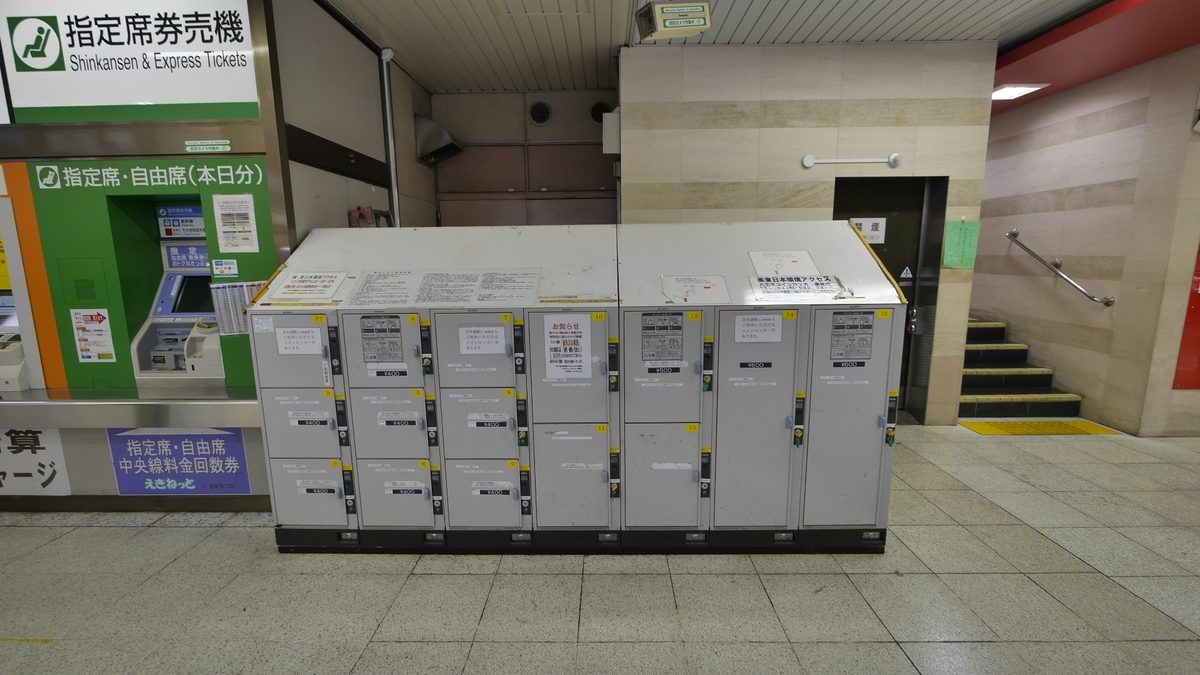
- Cheap, but no guarantee: coin lockers in stations cost roughly 300 to 1,000 yen per day depending on size. Large suitcases are the problem, as fitting lockers go quickly.
- Tokyo Station: inside the gates the lockers cost 400, 500 and 600 yen per day according to the operator, for a maximum of three days. There is a counter for very large items.
- Hotels: many hotels take luggage before check-in and after check-out, often free of charge. This is not a rule, so ask first.
- Valuables do not belong in a locker. Station lockers and the apps do not take cash and valuables, and the apps explicitly exclude passports and electronics.
What are the options?
| Option | Price according to provider | Suited for | Catch |
|---|---|---|---|
| Station coin locker | roughly 300 to 1,000 yen per day by size | day bags, small suitcases | large lockers often taken, maximum three days |
| Counter at Tokyo Station | 600 yen per item same day, multi-day 420 yen per night | very large suitcases | only there, fixed opening hours |
| Radical Storage | from 270 yen per day, some listings about 750 yen when we checked | any size, planned ahead | shops and hotels have their own opening hours |
| ecbo cloak | 500 to 800 yen per day, at JR stations sometimes 1,000 yen per item | if you prefer booking through an app | no cancellation on the same day |
| Hotel | usually free, not everywhere | guests before check-in and after check-out | no rule, ask first |
Comfortable and easy to plan: book storage in advance
If you do not want to hope for a free locker, book the drop-off point beforehand. Radical Storage* (advertising) arranges spaces with partners in Tokyo: shops, cafés and hotels, including near large stations such as Tokyo, Asakusa, Shinjuku and Shibuya. The provider’s Tokyo page says “from 270 yen per day”. The individual listings were around 750 yen per item and day when we checked on 25 October 2026, so expect that figure. The page names no size or weight limit.
What speaks for it: you book ahead, you know the address, and you can cancel free of charge up to one hour before drop-off, as the terms state. What to keep in mind:
- Opening hours: the partners are shops, not station lockers. When we checked, the page showed for example Shinjuku 10:00 to 22:00, Asakusa 9:00 to 18:00 and Shibuya 10:00 to 19:00. Plan to collect before closing time.
- Protection: according to the terms there is a guarantee of up to €10,000 per claim, expressly “not an insurance contract”. You must report a loss within seven days.
- What is not accepted: among others money, securities, electronics such as phones, tablets and laptops, documents such as passports, and art and jewellery above €100.
- If you do not collect: if you do not pick up your luggage at the booked time, the partner may dispose of it at its discretion according to the terms. Build in a buffer.
Coin lockers in stations
Most larger stations have lockers. In Tokyo they are the cheapest option, as long as you find a free one in the right size.
Tokyo Station. The operator Gransta lists three sizes inside the gates for 400, 500 and 600 yen per day, with storage limited to three days. The payment method is not stated on the page. JR East gives typical prices of 300 to 1,000 yen by size in an article from October 2025, and a surcharge of 100 to 200 yen on size M and L lockers at peak times. Important for suitcases: according to JR East, size L lockers exist only in the B1 Gransta area, about 40 of them next to several hundred smaller ones. According to JR East you can reserve lockers up to one month ahead by smartphone, and booking in advance is recommended.
Ueno. JR East lists 21 locker sites at the station (JR, Tokyo Metro and Keisei) in sizes from SS to LL, where L is meant for a large suitcase and LL for a large suitcase plus hand luggage. Most JR lockers accept cashless payment and IC cards, a few only cash. The JR page gives no prices. A travel portal gives 400, 500 and 600 yen for JR Ueno, 300 to 900 for Keisei and 300 to 700 yen for Tokyo Metro. This is a secondary source, so check the display on the machine on site.
Asakusa, Shinjuku, Shibuya. For these stations we have no verified prices, the official pages could not be retrieved during our research. A travel portal gives prices between 500 and 1,000 yen for Shinjuku, but the sources contradict each other. Treat such figures as a rough guide only.
How long can luggage stay? At Tokyo Station a maximum of three days. Travel portals also give three days for JR East lockers. After the deadline the contents are generally removed and stored separately. We did not find an official JR East rule on this, so do not plan beyond three days. For several days a counter or a hotel is the better choice.
Large suitcases: the counter at Tokyo Station
If your suitcase fits no locker, Tokyo Station has a counter run by Gransta. For the same day the operator lists 600 yen per item until 20:30, for luggage up to 30 kilograms and a sum of the three sides under 250 centimetres. For several days it lists 420 yen per item and night, 840 yen from the sixth day, daily from 8:00 to 20:00, and English is possible. Prices and hours appear on the page without a date, so call ahead if in doubt (phone number on the operator’s page).
ecbo cloak: booking through an app
ecbo cloak works much like Radical Storage. According to its help centre, storage costs 500 yen per day for items under 45 centimetres on the longest side and 800 yen for suitcases, in some places (including JR stations) 1,000 yen per item. The upper limit is 20 kilograms. You pay online in advance, and without a reservation nobody takes your luggage. Cancellation or changes are possible up to one day before check-in, on the day itself there is no refund. The help centre lists insurance of up to 100,000 yen per item. If you collect late, the normal daily fee applies on days 1 to 5, after which the bag is moved to the provider’s storage at double the daily rate. Valuables, cash, perishables and medication are excluded. Prices can differ by location, so check them in the app.
Ask your hotel
Many hotels in Tokyo keep luggage before check-in and after check-out. One example with an official statement: Prince Hotels Tokyo state that they store luggage at the bell desk or front desk free of charge. There is no general rule, and smaller properties without a staffed front desk often take nothing. Write to the hotel beforehand and say until when you can collect the bag. If you sleep in an airport hotel, you will find examples in our guides to hotels for an early flight and capsule hotels at the airport.
What is not allowed in a locker?
We did not find an official list of prohibited items for station lockers. The list used by the booking services is a sensible guide: no cash, no passports and documents, no jewellery, no electronics such as phones and laptops, nothing perishable. Always take valuables with you. Power banks, medication and travel documents belong in your hand luggage.
How do I plan the day?
- Arrival day: check-in usually starts in the afternoon. If you are in the city in the morning, drop the suitcase off and collect it later at the hotel. How to get from the airport is in the guides for Narita and Haneda.
- Departure day: work backwards from your departure: your airline’s check-in deadline, the trip to the airport, collecting the luggage. If you only fly in the evening, build a buffer into the pick-up.
- Layover: if you visit the city on a layover, you need a luggage plan and an entry plan together. Both are explained in the guide Tokyo layover.
- Paying: an IC card is handy for station lockers, see our IC card guide.